Garage Door Maintenance for Cold Climate States - Michigan, Minnesota, Wisconsin Guide
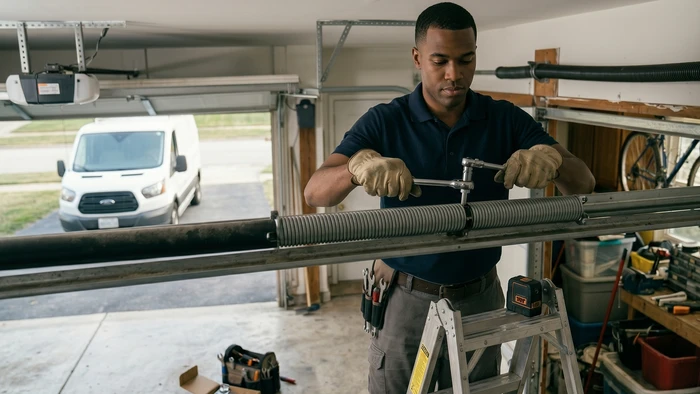
Spent a winter in Minneapolis once visiting family. The garage door on their house hadn't been touched since the previous owners. January morning, -15°F windchill, and the door wouldn't open. Opener ran, nothing moved. The bottom seal had bonded to the concrete overnight and the springs were so far gone that even if the seal hadn't been the problem, the door would have been too heavy for the opener to pull up anyway.
Cold climate garage door maintenance is different from what the general guides tell you. The stakes are higher and the failure modes are specific to what extreme cold does to metal, rubber, and lubricants. Here's the complete picture for Michigan, Minnesota, Wisconsin, and anywhere else that sees real winters.
What extreme cold actually does to each component
Springs - metal contracts in cold. A spring that's been losing tension gradually through the fall gets measurably stiffer and weaker in January temperatures. The counterbalance that was marginal in October becomes inadequate in the cold. And the physics of metal fatigue means springs that are near end-of-life are more likely to fail in cold weather than in moderate temperatures - the metal is less flexible when cold and less able to absorb the stress of each cycle without fracturing.
This is why spring failures cluster in winter. It's not coincidence. The spring was already worn; cold pushed it over the edge.
Lubricants - standard lubricants have a temperature range they're designed for. Below that range they thicken significantly. Thick lubricant on rollers, hinges, and chains means every moving part works against more resistance than it should. The opener compensates by running harder. The door moves slower. In extreme cold the lubricant can thicken enough that it essentially immobilizes components rather than lubricating them.
Bottom seal - rubber hardens and becomes brittle in sustained cold. A seal that compresses nicely against the concrete in September becomes rigid in January. Rigid rubber bonds to concrete and ice more readily than flexible rubber does. And when the opener tries to pull a frozen-bonded seal free, the brittle rubber tears rather than flexing free.
Nylon rollers - quality nylon rollers with sealed bearings handle cold well. Cheap nylon becomes brittle below certain temperatures and can crack under load. If the rollers are original to a door that's been through many cold seasons, inspect them carefully before winter.
Opener electronics - most residential openers are rated to about 40°F minimum for consistent operation. Below this, the lubricant inside the gearbox thickens and the opener may run sluggishly or trip its thermal protection even without being overloaded. An unheated attached garage in Minnesota can hit 0°F or below on the coldest nights.
Tracks - metal contracts in cold. Minor contraction creates slightly tighter dimensions at points where track sections join or where brackets hold the track. Combined with lubricant thickening, these tight spots can create resistance that shows up as grinding at a specific height that isn't present in warmer months.
The pre-winter maintenance checklist for cold climate states
October is the right time for this. Before the first hard freeze, not after. Doing this maintenance in November when temperatures are already dropping means working in the cold and the products may not perform as well. Early fall when the garage is still reasonable to work in is the window.
Full re-lubrication with cold-rated product. This is the single most impactful step. Drain or displace standard lubricant on all moving parts and replace with a cold-rated lubricant - one specifically formulated to maintain viscosity at low temperatures. Standard white lithium grease handles moderate cold reasonably well but for Michigan, Minnesota, and Wisconsin winters, look specifically for a product rated to at least -20°F or -30°F. The difference in performance between standard and cold-rated lubricant in a Minnesota January is dramatic.
What gets lubricated: every roller stem, every hinge pivot point, full length of both springs, the full length of the opener chain or drive screw, the opener rail. Not the track surface - tracks stay clean and dry. See our how to lubricate a garage door guide for the complete process.
Balance test. This is the test that tells you whether the springs are ready for winter. Disconnect the opener with the red cord. Lift the door manually to waist height. Let go completely. A balanced door holds position or drifts very slightly. A door that drops has insufficient spring tension - the spring is not counterbalancing the door weight properly.
In a cold climate context, a door that barely passes the balance test in October will fail it by January because the spring tension decreases further in cold. If the door is marginal in fall - address it before winter, not after the first failure. Full details on what the test looks like and what the results mean in our how to balance a garage door guide.
Bottom seal inspection and silicone treatment. Look at the bottom seal condition. Still flexible or has it gotten stiff and cracked? Any sections missing or torn? Replace if compromised - a bad seal in winter means cold air infiltration, potential freezing to the ground, and water damage from snowmelt.
Apply silicone spray to the bottom seal where it contacts the concrete. This creates a barrier that prevents the rubber from bonding to frozen concrete overnight. Reapply monthly through the winter. This single step prevents the most common cold-climate garage door emergency - the door frozen to the ground in the morning.
Weather seal inspection. Side seals, top seal - all four sides. Close the door and look for light or feel for draft. Any gaps get addressed before temperatures drop. Our garage door weather stripping replacement guide covers every seal type.
Hardware tightening. Freeze-thaw cycles work hardware loose. Bolts that were snug in summer loosen slightly as metal expands and contracts repeatedly. Socket wrench pass around all track brackets and hinge hardware before winter tightens everything up.
Inspect rollers. Spin each roller by hand. Should rotate freely with no stiffness or wobble. Any that are stiff or grinding - replace before winter, not after the first cold morning when the door barely moves.
The spring decision for cold climate states
If the springs are borderline - passing the balance test but just barely, or showing visible wear signs - the calculus for cold climate states is different than warmer regions.
In a mild climate, a borderline spring might be monitored through another season. In Michigan or Minnesota, a borderline spring in October becomes a failed spring in January with a high probability. Emergency service in a snowstorm at -10°F is a different experience than a planned spring replacement on a nice fall day.
Replace borderline springs before winter in cold climate states. The cost is the same either way. The inconvenience is dramatically different. And emergency service rates apply when the spring fails on a cold Saturday morning. Our spring replacement cost guide has the pricing breakdown. High-cycle springs are worth considering if the usage rate justifies them - full comparison in our high cycle vs standard springs guide.
In-winter maintenance - what to do when cold has already arrived
After every significant cold snap - apply fresh silicone to the bottom seal. The silicone barrier depletes with each temperature cycle and freeze-thaw event. Reapplication is quick and cheap compared to dealing with a frozen door.
Monthly lubrication check - in January and February in the coldest months, check whether the door operation sounds and feels different than it did in fall. If something sounds labored, a fresh application of cold-rated lubricant often resolves it.
After ice and snow accumulation - don't operate the door if there's significant ice buildup in the track or on the seal. Clear ice from the track channel with warm water before operating. Don't use salt in the tracks - it corrodes the track metal over time. Warm water only.
Monitor opener behavior in extreme cold - if the opener starts tripping its thermal protection (runs briefly then stops, requiring a wait before it works again) in cold weather when the door is otherwise normal - the opener is struggling with cold-thickened gearbox lubricant. Some techs will lubricate the internal gearbox on older openers as part of a service visit; check whether this is appropriate for your specific unit.
Insulation considerations for cold climate garages
For attached garages in cold climate states, an insulated door has meaningful impact on both the garage temperature and the adjacent living space. An uninsulated door in a Minnesota winter is essentially a large hole in the thermal envelope.
Going from a non-insulated door (R-2) to a triple-layer polyurethane door (R-13 to R-16) makes a dramatic difference in garage temperature on the coldest days. The garage won't be warm - it shouldn't be unless you're heating it - but the difference between 10°F and 25°F inside the garage matters for everything: the car starting easier, the opener running in a less extreme temperature, and the adjacent living space being noticeably warmer.
For conditioned garages - those with a heater - insulation is even more important. Every BTU you're putting in is trying to escape, and the door is one of the largest surfaces in the thermal envelope.
Full insulation guide with R-value recommendations in our insulated vs non-insulated garage doors guide.
Battery backup - especially important in cold climates
Power outages in cold climates happen in snowstorms - exactly when you most need the garage door to work. A battery backup opener keeps operating through outages automatically. No red cord pulling, no manual lifting in a blizzard, no car stuck inside when you need to leave.
In cold climate states, battery backup is less optional than in mild climates. Storm-related outages are common. Manual lifting in sub-zero temperatures is unpleasant at best and unsafe for some household members. Our battery backup opener guide covers which openers have the best integrated backup and what the real-world performance looks like in cold weather.
One cold-specific note: backup battery performance degrades in cold. A backup rated for 40 cycles at room temperature may provide 20-25 cycles in a cold garage. If battery backup is important to you in a cold climate, check the cold-weather performance specs for the specific model and test the backup function quarterly through winter.
The annual professional visit - timing in cold climate states
For most climates, the annual professional tune-up can happen any time. In cold climate states, the timing matters.
Best time: September or early October. The tech can assess spring condition with full knowledge of what winter will demand, complete the cold-weather lubrication, verify the balance and auto-reverse, and identify anything that's borderline and should be addressed before the first hard freeze.
A tech who comes in October and says "the springs have some life left but I'd recommend replacing them before winter" is giving you useful information on a reasonable timeline. A tech who comes in January to fix a spring that broke in a snowstorm is solving the same problem with a lot more inconvenience and potentially at emergency rates.
For what a complete professional maintenance visit includes and costs, our garage door tune-up cost guide covers the full breakdown.
GarageDoorRepairz - cold climate maintenance, pre-winter tune-up, spring replacement before the first freeze, or anything else the door needs. Give us a call in September and October while the timing is right.