Garage Door Opener Motor - Lifespan, Signs It's Dying, and When to Replace
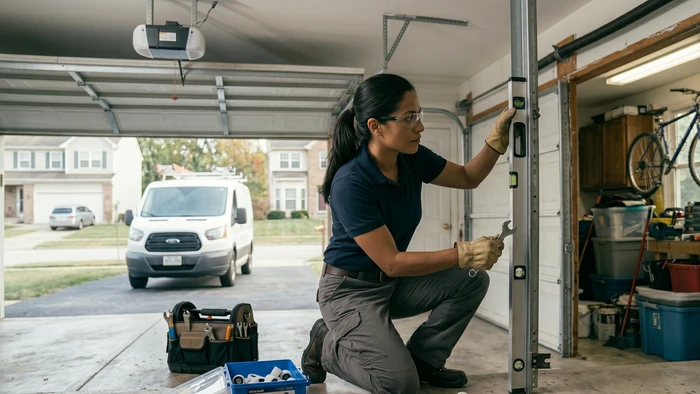
The motor is what actually does the work in your opener. The chain or belt moves the trolley, the trolley moves the door arm, but it all starts with the motor spinning. When the motor starts going, the symptoms are gradual and easy to explain away until one day the door just doesn't open anymore.
Here's how to read what the motor is telling you before that happens.
How long opener motors actually last
Under normal conditions - properly balanced door, springs doing their job, door maintained - a quality opener motor runs 12-15 years. Some go longer. Some less.
What shortens motor life dramatically: running against a heavy door. An opener on a door with weak springs is lifting 150-200+ pounds on every cycle instead of guiding a counterbalanced door that weighs nearly nothing. That extra load heats the motor faster on every cycle, wears the brushes faster, and shortens the rated lifespan by years.
This is why spring maintenance is actually opener maintenance. Every time a spring loses tension and the door gets heavier, the opener motor is paying the price. Our how to balance a garage door guide shows the test that tells you whether the opener is working harder than it should.
Signs the motor is starting to fail
Slower than it used to be. Door used to open in 12 seconds. Now it takes 18-20. The motor is producing less torque - it's working as hard but accomplishing less. This is gradual so it sneaks up on you.
Different sound than before. Not louder, necessarily - different. A motor showing wear has a slightly different acoustic character. If you know what your opener sounded like when it was new and something sounds different now - that's real information.
Struggles at the beginning of the cycle. Motor gets the door moving but takes a noticeable moment before it starts. This points to the starting capacitor weakening - the component that gives the motor its initial burst. Test: push up on the door at the exact moment you activate the opener. If it suddenly works fine with that assist - capacitor is the issue, not the motor itself. Capacitor replacement is $10-30 and much cheaper than a new opener.
Runs but door barely moves. This is usually the drive gear, not the motor. The plastic gear inside the housing strips. Motor runs fine, gear teeth are gone, nothing transfers. Pop the cover and look. Gear replacement kits are $20-40 for most brands.
Overheating and tripping thermal protection. Motor gets hot after normal operation and needs to cool before working again. In a moderate climate in a well-maintained garage - this shouldn't happen. If it does, the motor is running under excess load (springs again) or the motor's internal bearings are degraded and generating more friction than they should.
Capacitor vs motor - important distinction
A lot of what looks like motor failure is actually capacitor failure. The capacitor is a cheap component. The motor is a major repair.
Before concluding the motor needs replacement: test the capacitor. The push-assist test described above is a quick field test. A proper capacitor test requires a multimeter with capacitance measurement - a tech can do this in minutes.
If the capacitor tests bad - replace it ($10-30, straightforward job for a tech) and retest the opener.
If the capacitor is fine and the opener still struggles - now you're looking at the motor itself.
Motor replacement vs full opener replacement
Opener motors can be replaced. For major brands like LiftMaster and Chamberlain, motor replacement kits are available.
Cost comparison: motor replacement $100-150 for the part plus labor, versus new opener $250-450 installed.
The math on motor replacement only works in your favor on a relatively recent opener - one that's under 8-10 years old with otherwise good condition. On a 12-year-old opener where the motor is failing, other components are close to the same age. The logic board, the drive gear, the capacitor - these have had the same number of cycles. Replacing the motor on a 12-year-old unit extends the life of that unit for an uncertain period while all the other aged components continue their timeline.
At 10+ years with a significant failure - get a replacement quote alongside the repair quote. Our how long does a garage door opener last guide covers the age benchmarks specifically and what warning signs indicate the end of useful life is close.
The warranty consideration
Most quality opener warranties are 1-5 years on parts, some with lifetime motor warranty on premium models. LiftMaster's premium models carry a lifetime motor warranty specifically.
If the opener is still under warranty - a motor failure should be a warranty claim, not an out-of-pocket repair. Check the original documentation or look up the model number and warranty terms before agreeing to any repair payment.
After replacement - what to do differently
New opener going into a garage where the old one failed early - figure out why the old one failed early before assuming the new one will last longer by default.
Spring balance check before installation. If the springs are weak, the new opener starts under the same excess load that shortened the last one's life. Fix the springs first.
Lubrication schedule set. New opener, fresh start - set calendar reminders for lubrication and maintenance twice a year. Our complete garage door maintenance checklist has the full seasonal schedule.
GarageDoorRepairz - motor diagnosis, capacitor testing, full opener replacement. Give us a call and we'll tell you what's actually wrong before recommending anything.