How to Manually Open a Garage Door During a Power Outage
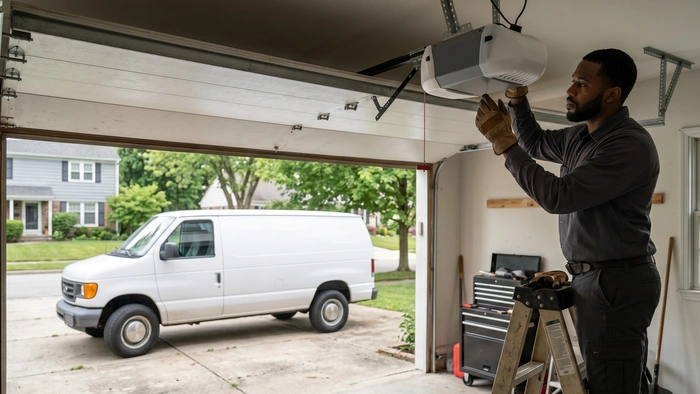
Power went out. Car is in the garage. You need to leave.
This happens to everyone eventually and the people who've never thought about it before are the ones standing in the dark pulling on a door that won't budge. Here's exactly what to do.
The red cord - this is what you need
Every garage door opener has an emergency release. It's the red cord hanging from the trolley on the rail - the mechanism that rides along the track. The cord hangs down from the trolley and usually has a red handle or tag on the end.
Pull it straight down or at the angle it naturally hangs. You'll feel or hear a click as the trolley disconnects from the drive mechanism. The door is now completely separate from the opener. The opener can run but it won't affect the door.
Now lift the door by hand from the bottom. Grab the door with both hands, lift straight up. If the springs are in good shape, the door should be relatively easy to lift - the spring counterbalance does most of the work. Lift it to fully open.
That's it. That's the whole process.
What if the door is heavy to lift
If the springs are properly tensioned for the door weight, lifting manually should feel manageable for most adults - like lifting a moderately heavy box. Not effortless, but not a serious struggle.
If the door is very heavy - requires two people or significant effort - the springs are losing tension. They're not counterbalancing the door's weight the way they should. This is worth noting and addressing after the outage passes. Our how to balance a garage door guide explains what proper spring tension feels like and how to test it.
A door that's become noticeably heavier over time is one of the main signs that springs are wearing out. Our signs your spring is about to break guide has the full list of things to check.
Keeping the door open while you get the car out
Once you've lifted the door, it needs to stay open while you drive out. On a properly balanced door, the door should hold in the open position on its own - the spring tension keeps it up.
If the door doesn't stay open and starts drifting back down when you let go - again, spring tension issue. Have someone hold it while you pull the car out, or prop it with something sturdy. Don't drive out with the door unsupported if it's drifting - it can come down on the car.
Re-engaging the opener after power returns
After you get back and power is restored, you need to reconnect the door to the opener before using it normally. The red cord disconnected the trolley - it needs to re-engage.
Most modern openers re-engage automatically. Lower the door manually to the fully closed position, then activate the opener on the close cycle. As the trolley moves, it hooks back onto the door arm automatically. You'll hear or feel the click of re-engagement.
If the auto re-engagement doesn't happen - look at the trolley on the rail. There's usually a lever or latch that needs to be in the correct position. Some older openers require you to manually pull the trolley back to the door arm until they click together.
After re-engagement, run the door through a full open and close cycle to confirm it's operating normally. If the opener is running but the door isn't moving, the connection didn't happen - full explanation in our opener runs but door doesn't move guide.
If the opener was also affected by the power event
Sometimes a power surge accompanies an outage - when power restores, it doesn't come back smoothly. This surge can affect the opener's logic board or memory.
If the opener seems to be working after power returns but behaving strangely - limits off, remote not responding, door behavior changed - the power event may have reset or damaged settings. Our reset after power outage guide covers the full recovery process step by step.
A surge protector on the garage outlet is the $15 fix that prevents the opener from taking a hit during the next outage. Worth adding before the next storm.
Battery backup - the better long-term solution
The entire manual operation process becomes unnecessary if the opener has battery backup. Battery backup openers run normally during power outages - you press the button, door opens, done. The manual process is only for openers without backup.
If you have a modern LiftMaster or Chamberlain opener - check whether yours has integrated battery backup. Higher-end models have it built in. If yours doesn't, add-on battery backup modules are available for compatible models.
For a full comparison of which opener features are actually worth it, our smart garage door opener worth it guide covers battery backup alongside the other features that matter.
External emergency access - if you're locked out from outside
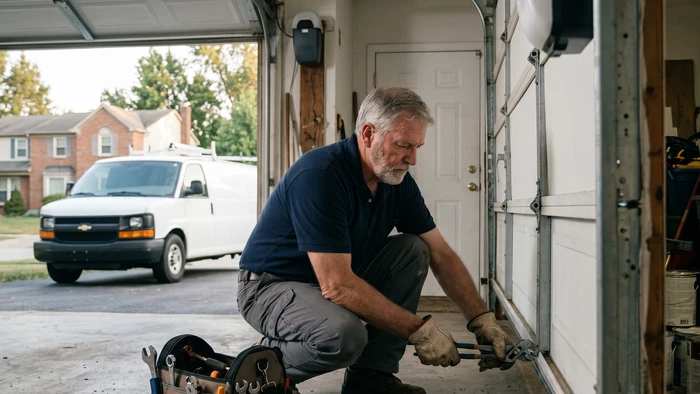
The above process assumes you're inside the garage when the power goes out. If you're outside - locked out of the garage because the opener won't respond - the process is different.
Most modern doors have an external emergency release - a lock cylinder on the outside of the door, usually near the center at the top. Insert the emergency release key, turn it, pull the release cable inside, and the door disconnects the same way as pulling the red cord from inside. Then lift manually.
If you don't have the key - check the documents that came with the opener. Many come with a key. If lost, a locksmith can open the cylinder. Don't try to pry the door open from the bottom - this damages the bottom panel and seal and doesn't actually work well on modern doors.
One thing to do right now while everything is fine
Before the next outage happens - practice this. Pull the red cord while the door is closed and verify it disconnects. Lift the door manually. Lower it. Re-engage by running the opener.
Takes 3 minutes and means that when you actually need this in the dark during a storm, you already know exactly how it works.
GarageDoorRepairz - battery backup installation, spring adjustment, or opener service after a power event. Give us a call.