Ice Storm and Frozen Garage Door - How to Deal With It Safely
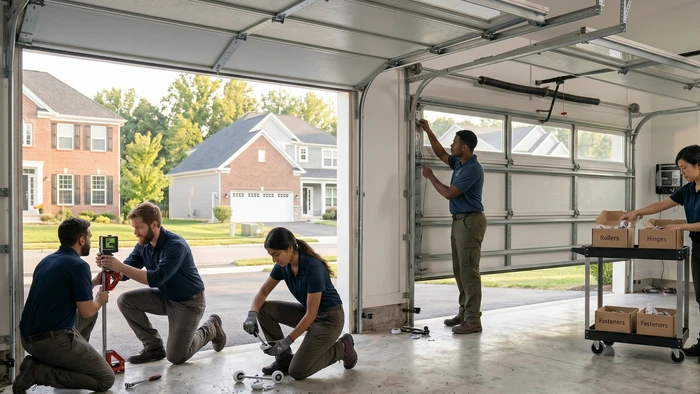
The ice storm was last night. This morning the garage door is either frozen shut, frozen open, or moving wrong and making noises it didn't make yesterday. Each of these situations has a specific fix - and a specific way to make it worse by doing the wrong thing first.
Here's how to handle each frozen garage door scenario safely.
Frozen to the ground - the most common ice storm situation
The bottom seal bonded to the ice or frozen concrete overnight. The opener tried to pull the door up, the seal held, and either the opener tripped its force protection and stopped, or you heard a grinding struggle before giving up.
What not to do first: keep pressing the button. The opener running against a frozen-shut door is putting force into the opener arm, the trolley, and all the hardware between them. Repeated attempts strain all of this hardware and can damage the opener arm or strip the drive gear.
What to do:
Disconnect the opener first using the red emergency release cord. This separates the door from the opener mechanism so any manual effort goes directly to the door rather than through the opener.
Use warm water poured along the bottom seal where it contacts the ground. Not hot water - thermal shock can crack concrete. Warm water breaks the ice bond at the seal. Run it along the full width of the door. Wait 30 seconds, try lifting manually from both corners simultaneously.
If the door still doesn't release - more warm water, let it penetrate, try again. Forcing the door while the seal is still bonded tears the seal and potentially damages the bottom panel.
Once it releases and you can lift manually - lift slowly to verify the rollers are still in the tracks and the door is traveling normally before reconnecting the opener.
Bottom seal torn during ice event
If the seal was already in poor condition before the ice storm - brittle, cracked, hardened - the ice bonding event may have torn it. You'll see this as a gap under the closed door or visible tears in the rubber.
A torn seal is a repair-after-the-storm item, not an emergency. The door still functions without the bottom seal. Get through the storm event, then address the seal once temperatures allow. Don't try to operate the door with a torn seal wedged in the tracks - remove the damaged sections of seal that might interfere with door travel.
Seal replacement runs $75-150 professionally installed. Our garage door bottom seal replacement guide covers the full cost and DIY options.
Door frozen in the open position
This is the more urgent scenario. You opened the garage before the ice storm and now it won't close - either the tracks or hardware have ice in them, or the door mechanism is affected by the cold.
Getting the door down is the security priority. Without the door closed, the garage is exposed to weather and the home's thermal envelope is compromised.
Check the tracks first. Ice in the track channels prevents roller travel. With the door in the open position, look at the track sections - especially the curve where vertical meets horizontal - for visible ice buildup. Remove ice from the track using warm water and a cloth. Don't use a metal tool to chip at ice in the tracks - you risk damaging the track surface.
Check whether the rollers themselves have ice on them. Ice on a roller prevents it from rolling and causes it to drag through the track instead. Clean each roller with warm water.
Try closing manually (disconnect the opener first). If the door starts to close but hangs up at a specific point - that's where ice is causing the resistance. Address that section specifically before proceeding.
If the door closes manually, reconnect the opener and test slowly. Watch for any points of resistance where the motor sounds strained.
Opener refusing to work in extreme cold
Temperature affects more than just ice formation. In extreme cold, lubricants thicken, springs stiffen, and some opener electronics behave differently.
The opener runs but very slowly: standard lubricants have thickened to the point of significant added resistance. Every roller, hinge, and chain/belt is fighting thicker-than-designed lubricant. Re-lubricate when temperatures allow using a cold-rated lubricant.
The opener starts then stops immediately: this is often the thermal protection doing its job - the motor is running under unexpectedly high load from the thickened lubricant and cold-stiffened spring tension, getting hot quickly, and shutting down protectively. Let it cool, re-lubricate, and test again.
The door moves slowly even after the opener gets it started: spring tension is reduced in cold. Metal contracts and stiffens. A spring that's losing tension anyway performs measurably worse in extreme cold. The balance test after the cold event will tell you whether the spring needs attention. Our how to balance a garage door guide covers this test.
Ice in the tracks - how to clear it safely
Ice inside the track channels is common after freezing rain. Roller travel through an ice-filled track causes the roller to act as a plow - which is hard on the roller bearing and creates resistance the opener fights on every cycle.
Warm water is the right tool. Pour it into the track channel from the top and let gravity carry it through. Follow with a cloth to absorb the water before it refreezes. In a garage with any heat source, turn it on before clearing the tracks - a slightly warmed space prevents the cleared water from immediately refreezing.
Don't use salt or ice melt products in the tracks. These products can corrode the track metal and damage roller surfaces over time. Warm water is all you need.
After clearing ice from the tracks - lubricate. Wet tracks followed by re-freezing conditions need lubrication on the rollers specifically to prevent them from bonding to the track surface. White lithium grease on each roller stem before temperatures drop again.
What ice storms do to spring condition
Torsion springs are metal. Metal contracts in cold. Springs that are already near the end of their cycle life are more vulnerable to failure in extreme cold than at moderate temperatures.
The pattern that shows up every winter: spring breaks on the coldest morning of the season. The spring had been losing tension for months and managed through the fall, but the combination of cold-stiffened metal and the added load of a cold-thickened door system pushed it past failure.
After an ice storm event, do the balance test once temperatures return to normal. Disconnect the opener, lift to waist height, let go. If the door drops noticeably - spring tension has been affected, either by the cold event accelerating existing wear or by actual spring damage. Don't ignore this. A spring that fails in the middle of winter becomes emergency service rather than a planned repair. Our spring replacement cost guide covers what replacement involves.
Weatherstripping and seal damage from ice
Ice events often reveal or accelerate weatherstripping damage. The bottom seal is most obvious - it either tears during the freeze event or the damage from having been brittle for months becomes visible. But side seals and top seals also suffer in ice events.
After the ice storm, do a full perimeter inspection when temperatures allow. Close the door and look at all four edges - any light visible, any gap you can feel air through. Damaged seals let in cold air, moisture, and pests.
The winter after an ice storm is a good time to address any sealing that was marginal before the event. Our garage door weather stripping replacement guide covers how to inspect and replace every seal type.
Prevention before the next ice storm
Silicone spray on the bottom seal before temperatures drop. This is the single most effective prevention for the frozen-to-the-ground scenario. Apply it to the bottom seal where it contacts the concrete, and reapply monthly through winter. The silicone creates a barrier that prevents the rubber from bonding to concrete or ice.
Cold-rated lubricant on all moving parts before winter. Standard lubricants thicken in cold and provide inadequate protection in extreme temperatures. Replacing them with cold-rated lubricant before the first major cold event means the system is properly lubricated through the worst of winter rather than discovering the problem when the door won't move.
Full winter preparation process is in our winterizing your garage door guide - all 8 steps in order, including what to do before the first freeze of the season.
GarageDoorRepairz - ice storm damage, frozen door, spring assessment, or any winter weather issue. Give us a call and we'll get it sorted.