Salt Air and Coastal Garage Door Corrosion - Prevention and Repair
A garage door a mile from the ocean ages differently than the same door a hundred miles inland. The same steel, the same paint, the same manufacturer - but the coastal door develops rust in 3 years that would take 15 years inland. The difference is salt air and the mechanism it uses to destroy metal surfaces.
Understanding what's happening changes how you maintain the door. Standard advice - touch up paint chips twice a year, wash occasionally - is the minimum for inland homes. For coastal homes it's not enough. Here's what actually protects a garage door near the ocean.
What salt air actually does to steel
Salt is hygroscopic - it attracts and holds moisture from the air. When salt particles land on a painted steel surface, they hold moisture against the paint continuously. That sustained contact degrades the paint bond at the molecular level. The paint adhesion weakens, micro-blisters form under the surface, and eventually the paint lifts and peels.
Once the paint lifts, bare steel is exposed. At that point, the salt-moisture combination accelerates the electrochemical reaction that causes rust. Rust formation in a salt environment happens in weeks rather than the months or years it would take in dry conditions.
The process is also self-perpetuating. Rust is porous and holds more moisture and salt than intact paint does. Once rust starts, the underlying steel continues oxidizing under and around the rust spot even if you clean the surface. This is why coastal rust needs aggressive treatment at the first sign - not a light sanding and paint touch-up when it's already established.
The maintenance schedule that actually works near saltwater
Standard inland maintenance: wash door twice a year, touch up chips annually, wax once a year.
Coastal maintenance within a mile or two of saltwater: wash monthly. Every month. The salt accumulation between washes is significant and works through the paint continuously. Monthly washing removes it before the damage compounds.
Use fresh water and mild car wash soap. Rinse thoroughly - salt residue from a poor rinse continues working. Dry with a soft cloth rather than air drying, because air drying in a salt environment leaves salt residue on the surface even after washing.
Wax every three to four months instead of annually. The wax layer is the primary barrier between the paint and salt air. When the wax is depleted, salt contacts the paint directly. In a coastal environment the wax depletes faster from salt exposure and UV. The three-month reapplication schedule keeps a meaningful protective layer in place continuously.
Touch up paint chips within days, not weeks. In an inland environment, a small chip is low priority - light surface rust develops slowly and a touch-up any time in the next month or two is fine. Coastal: a paint chip is an urgent repair. Bare metal in a salt environment starts rusting in days, not weeks. Carry touch-up paint matched to the door color and use it immediately when you find a chip.
The right products for coastal applications
Marine-grade touch-up paint. Standard exterior paint works adequately inland but degrades faster in salt environments. Marine paint is formulated specifically for constant salt exposure - it maintains adhesion and integrity longer than standard automotive or exterior paint.
Rust-inhibiting primer under any paint touch-up. This isn't optional in a coastal environment. Apply rust-inhibiting primer to bare metal before any topcoat. Inland you might get away with going straight to paint. Coastal: always prime first.
Fluid Film or similar lanolin-based corrosion inhibitor. This product is used extensively on boats and industrial coastal equipment. Applied annually to the back of door panels, hardware, springs, and tracks, it provides corrosion protection that outlasts conventional lubricants in salt exposure. Not elegant-looking on the door interior but effective.
Silicone sealant on exposed edges. The bottom edge of the door, panel corners, exposed metal edges - these are where moisture wicks in. A thin bead of clear silicone at exposed edges prevents this. Reapply annually.
Hardware is more vulnerable than the panels in coastal environments
This is the part of coastal garage door maintenance that most homeowners underestimate. The panels get attention because they're visible. The hardware - springs, cables, hinges, track brackets - is where the corrosion often gets critical first.
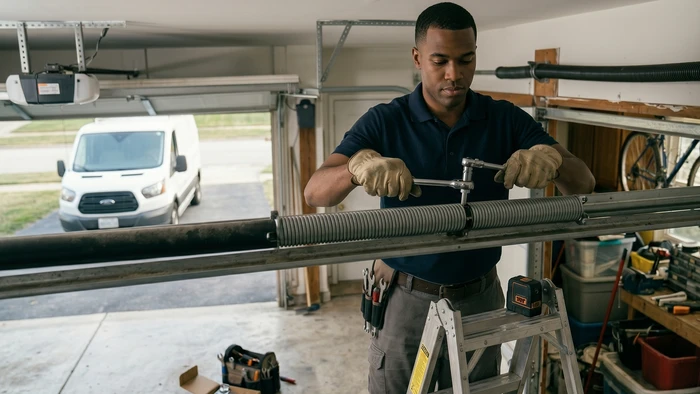
Springs in coastal environments need inspection every six months. Salt air penetrates the coils and rusts the spring metal internally - you can't see it from the outside at first. A spring that looks acceptable may have internal corrosion that's significantly weakened it. The visual signs of advanced corrosion - rust that's changed the coil surface texture, pitting on the coil faces - mean the spring is compromised. Our signs your spring is about to break guide covers what advanced spring wear looks like.
Cables - inspect quarterly in coastal environments. Individual wire strands in the cable corrode and break, weakening the cable without it being immediately obvious. Look for any reddish discoloration along the cable length or at the drum attachment points. Fraying visible to the eye means the cable is already well past the point where it should have been replaced. Our cable replacement cost guide covers what cable replacement involves and costs.
Track brackets and hinge hardware - salt causes corrosion at bolt connections and bracket surfaces that can make hardware difficult to remove or adjust when service is needed. Lubricate all hardware more frequently in coastal environments - monthly in aggressive locations rather than the standard twice yearly.
Treating established rust - coastal approach
Surface rust on a coastal door needs more aggressive treatment than inland rust because the environment that caused it is still present. Simply sanding, priming, and painting over surface rust without neutralizing it first is less effective in a coastal environment.
Use a rust converter product before priming. Rust converter chemically neutralizes rust and converts it to a stable iron compound. Apply it to the sanded area, let it react per the product instructions (usually turns the rust black or dark gray), then prime and paint. This extra step is particularly valuable in coastal environments because any residual rust you miss will continue progressing under the paint faster than it would inland.
For pitting - rust that's created actual texture changes in the steel surface - auto body filler (Bondo or similar) after rust treatment fills the pits before priming. Sand smooth when cured, prime, paint.
Rust-through - holes in the panel - requires panel replacement. No surface treatment restores structural integrity to a panel with holes. Get a panel replacement quote and compare it against the cost of a new door if multiple panels are affected. Our when to repair vs replace garage door guide covers the math on this decision.
Material alternatives when steel keeps losing the battle
If a steel door has rusted through multiple times in a coastal location and maintenance is an ongoing significant expense - the next replacement is the right time to consider different materials.
Aluminum - doesn't rust. Lighter than steel, dents more easily, but zero corrosion regardless of salt exposure. Higher upfront cost, essentially zero corrosion maintenance over the door's life. For properties within close range of saltwater, aluminum's maintenance cost advantage over steel can be substantial over 15-20 years.
Fiberglass - doesn't rust, handles moisture very well, can be manufactured to look like wood grain. The gel coat surface requires periodic maintenance to prevent UV degradation (oxidation that turns fiberglass chalky) but this is a different and less aggressive problem than steel rust.
When getting quotes on a new door in a coastal area - ask specifically about aluminum and fiberglass options alongside steel. The cost comparison at the door level doesn't account for the maintenance cost difference over the door's life, which in aggressive coastal environments significantly favors non-ferrous materials.
Interior garage humidity - the attack from the inside
In humid coastal environments, condensation forms on the inside of garage door panels when temperatures change. The garage warms up during the day, cools at night, moisture condenses on the cooler metal surfaces. This is corrosion from the inside simultaneously with the salt attack from outside.
An insulated door significantly reduces interior condensation. The insulation layer brings the interior door surface closer to the ambient garage temperature, reducing the temperature differential that causes condensation. In coastal humid environments, insulation is both a thermal and a corrosion argument.
Garage ventilation helps too - a wall vent or a dehumidifier in the garage during humid months keeps interior humidity lower and reduces condensation. These aren't expensive changes and they meaningfully reduce the inside-out attack on the door panels.
Full detail on coastal and humid climate maintenance is also in our garage door rust prevention for humid and coastal climates guide.
GarageDoorRepairz - coastal rust treatment, panel replacement, aluminum or fiberglass door installation, or full maintenance assessment for coastal properties. Give us a call.